How to Fold a Silk Saree Without Creases or Zari Damage
Silk rewards patience. Fold it the right way — with the weave, not against it — and your Kanjeevaram or pattu stays crisp, glossy and crease-free for decades.
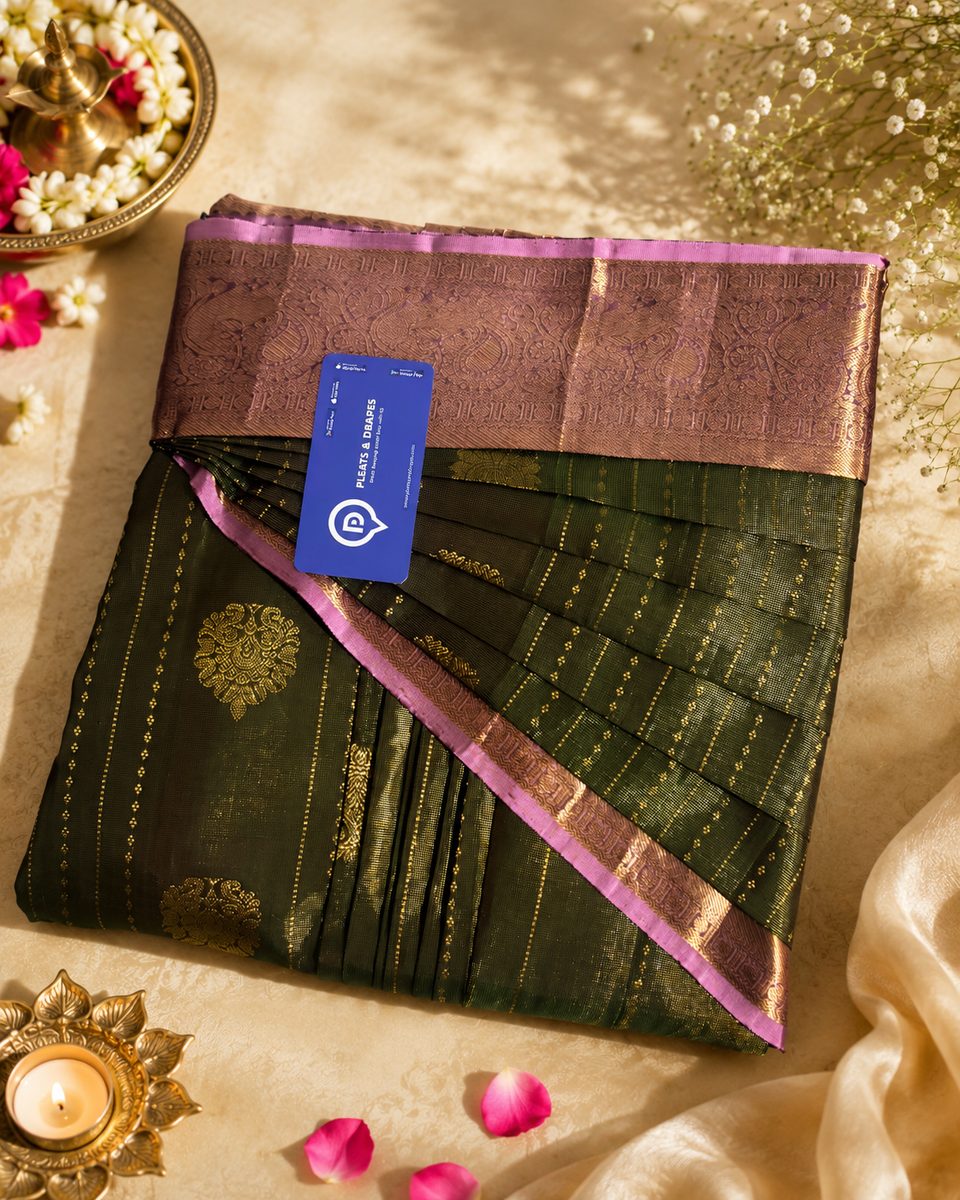
Why silk needs a gentler fold
Silk is a protein fibre, and the zari woven through a good Kanjeevaram or pattu saree is fine metal thread wrapped around a silk or cotton core. Both are unforgiving when creased hard in the same place for months. A sharp, pressed fold slowly weakens the fibres along that line until a pale crack appears — and in zari borders, the metal actually fractures and flakes.
The good news is that damage is almost entirely preventable. It comes down to folding along the fabric's natural lines, keeping the zari cushioned, and never letting one crease sit undisturbed. Get these right and even an heirloom saree stays wedding-ready for the next generation. If you would rather leave your finest pieces to specialists, our box folding service does exactly this.
How to fold a silk saree correctly
Start on a clean, flat surface
Lay the saree out fully on a clean bed or table — never fold it bunched up in your lap. Make sure your hands are clean and dry, as oils and moisture transfer straight into silk. Smooth the fabric flat so there are no trapped wrinkles before you begin.
Fold lengthwise with the zari inside
Fold the saree along its length into three or four broad panels, turning the zari border and any heavy embroidery to face inward. This keeps the metallic threads from rubbing against the box or catching on other fabric. Aim for wide, gentle folds rather than tight, narrow ones.
Lay acid-free tissue along the folds
Place a sheet of acid-free tissue paper between each layer, especially over the zari border and the pallu. The tissue cushions the folds, absorbs slight moisture and stops the metallic work pressing into the silk. Ordinary newspaper is a mistake — its ink and acidity stain and yellow silk over time.
Fold into loose, even sections
Now fold the long strip into three or four even sections to fit your storage box or shelf. Keep the folds loose — a little air between layers is good. Avoid folding a saree into a small, tight square, which forces deep creases exactly where the fabric is most stressed.
Store flat and rotate on a schedule
Place the folded saree flat, heaviest pieces at the bottom of the stack. Then set yourself a reminder: every three to four months, take it out, shake it gently and refold along different lines so no single crease is ever pressed permanently. This rotation is the secret to crease-free silk.
Small habits that protect silk
- Rotate the fold lines every few months so creases never set.
- Use acid-free tissue along zari and embroidered borders.
- Air the saree in gentle shade for an hour before refolding.
- Store flat and loose, with heavier silks at the bottom.
What to avoid with silk
- No plastic covers — silk needs to breathe; plastic traps moisture and yellows it.
- No newspaper — the ink and acidity stain and weaken the fibres.
- No hard, tight folds — narrow creases crack zari and mark silk.
- No long-term hanging — the weight stretches and distorts the weave.
A note on pre-pleated silks
If a silk saree is pre-pleated for regular wear, fold it so the set pleats stay intact rather than crushing them flat — lay the pleated section on top and fold around it loosely. This keeps the pleats crisp between wears without pressing new creases into the body of the saree.
For sarees you wear often, our silk saree pre-pleating service sets pleats that hold their shape, and pairs naturally with careful folding in between.
Quick reference
- Zari faces inward
- Folds stay loose & wide
- Refold every 3–4 months
- Tissue: acid-free only
Storing a whole collection? See our full saree storage & preservation guide.
Professional box folding for your silks
If your heirloom Kanjeevarams and pattu sarees deserve more than a hurried fold, our saree box folding service folds each one along safe lines, cushions the zari with acid-free tissue and packs it to stay crease-free — ready to gift, store or travel with.
Silk folding questions
Protect your finest silks
Send us a photo of your sarees on WhatsApp and we will fold and pack them to stay crease-free and zari-safe.